Are AI Football Predictions Actually Accurate?
How to assess football prediction accuracy using dated records, market-specific results, meaningful baselines and clear limits on what screenshots prove.
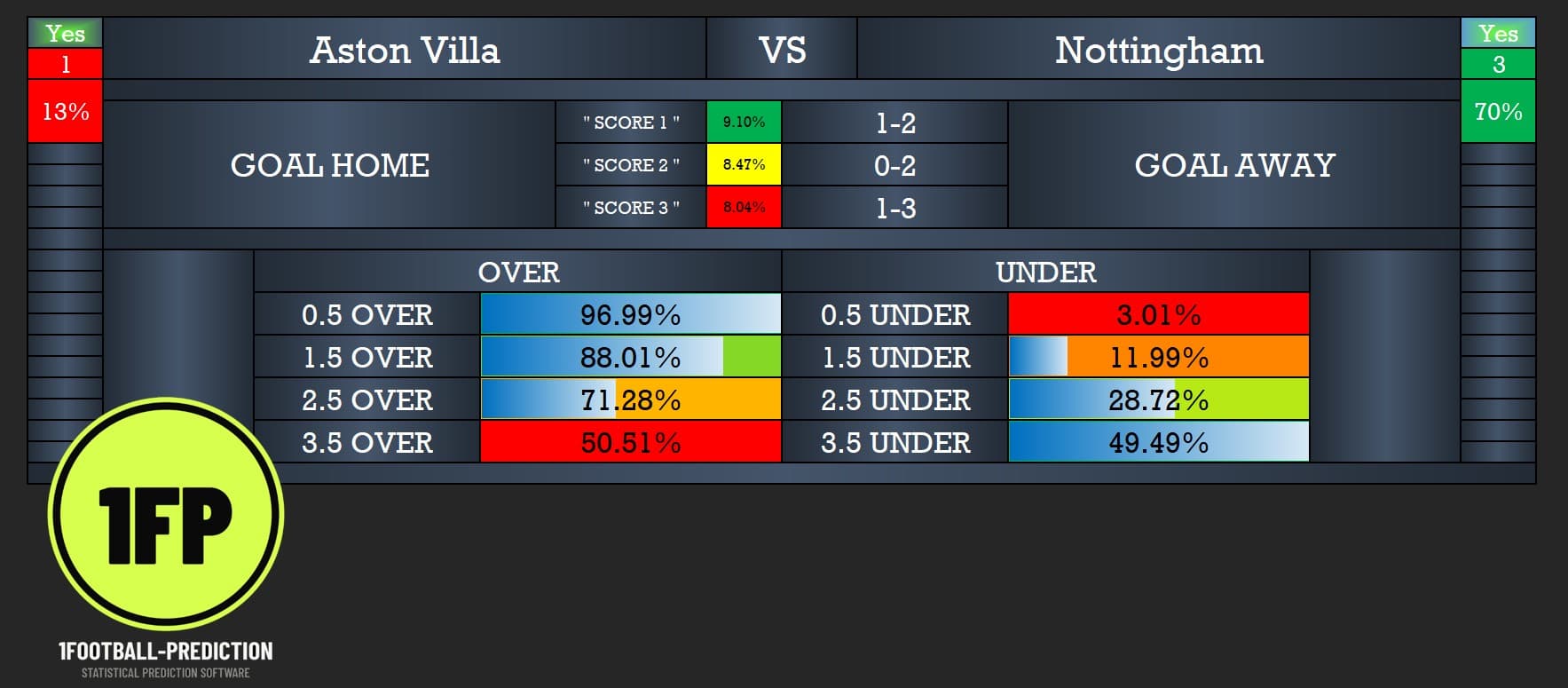
A football prediction model should be judged using dated, complete records for a defined market. A screenshot of a winning selection, or a percentage without its sample and period, cannot establish accuracy.
What our public record measures
The public track record concerns the free website model. It records market picks and their settled outcomes. It is not a verified performance record for the paid software in our store, and its match-result and goals markets do not establish a correct-score hit rate.
The results log captures the initial pick when a forecast is inserted. A later forecast on a match page can differ. Some results can remain pending because of missing data or processing delays; pending picks are not wins or losses.
Why the previous 48% headline needed correction
An earlier version quoted 104 wins from 216 graded picks: 56/108 for over/under 2.5 goals and 48/108 for 1X2. Those divisions give 48.1%, 51.9% and 44.4%, respectively. However, that article did not provide a reproducible dated export or a precise evaluation period. They must not be treated as current verified performance figures.
Use the live record to inspect the available results. For any future performance summary, we need the exact period, settled sample, wins, losses, voids and pending picks, together with a saved source record.
How to assess a hit rate fairly
- Compare the same market and selection rule. A home-win forecast and an exact-score forecast have different difficulty.
- Use a meaningful baseline. Randomly choosing among three outcomes gives a theoretical one-third baseline, but teams are not equally likely to win. Beating that simple baseline does not establish useful predictive skill.
- Do not assume a two-outcome market should score 50%. Its actual outcome frequencies and the selection rule matter.
- Keep correlated picks in context. Two markets from the same fixture are not two independent matches.
- Separate accuracy from profitability. A hit rate alone does not establish financial returns. A return calculation also needs documented prices, stakes, costs and a consistent rule fixed in advance.
- Check calibration. Across a sufficiently large comparable sample, outcomes assigned 70% should occur near that frequency if estimates are well calibrated. A label of 70% is not evidence that calibration has been demonstrated.
What the model includes
The website methodology explains the goals-based approach used for the free forecasts and its limitations. It does not use injuries, lineups or weather as inputs. This description should not be assumed to explain a paid workbook without inspecting that product.
What buyers should ask for
For a paid tool, look for genuine demonstrations of that exact product, its version, inputs and output. For performance claims, ask for a complete dated record including losing selections, rather than selected successful screenshots.
Correction, 19 September 2026: Removed claims that the record is never edited, that an undated percentage describes current performance, and that the free model is proven to be the same as the paid software. No historic results have been changed by this article correction.
Predictions are estimates, not guarantees. 18+. Support for gambling-related harm.